Battery powered IoT devices crucial to 2020+ standards

Technology must transfer data to the central system in real time, otherwise it may have negative consequences. If the sensor battery power runs out, a machine failure may stop production for one day or lead to direct danger. If battery life is unbelievable and short, IoT applications will become useless, causing more interference rather than making life easier for its intended purpose. Therefore battery powered IoT devices come as a standard in up-to-date IoT installations

Wireless sensors and sensor networks are one of the elements of the Internet of Things systems and intelligent factories. Replacing the standard sensors and data collection devices with versions that communicate wirelessly gives many benefits, but also enforces a highly thought-out system design that will minimize energy consumption. This is important because these systems must work for many years without servicing. In the article we present the issues regarding the design of systems and forecasting of energy consumption in IoT systems.

Wireless communication vs Battery power

The idea of wireless sensor networks has been around for at least two decades, while the IEEE subgroup working on personal wireless networks defined the 802.15.4 standard in 2003, a year later the first versions of ZigBee appeared. Since then, many varieties of wireless communication have been developed, such as LoRa & NarrowBand-IoT and additional functions introduced, as a result of which designers now have a choice of various open or proprietary protocols. What significantly affects the way the entire project is implemented is energy consumption.

Obrazek posiada pusty atrybut alt; plik o nazwie battery-iot-esp32-1030x386.png
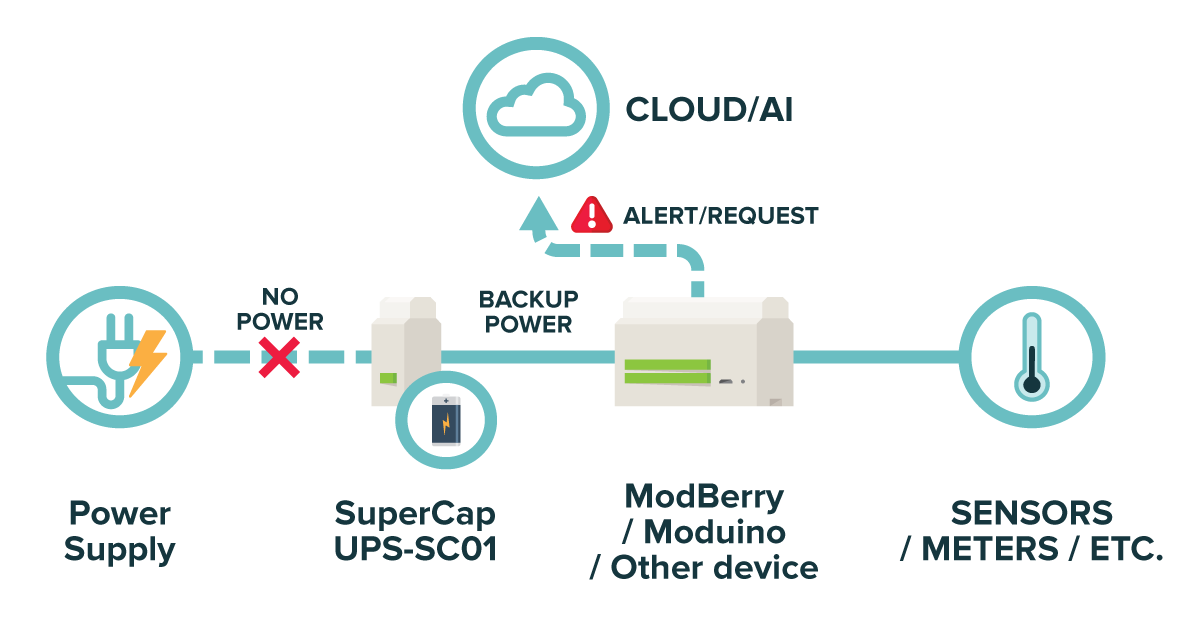
Battery powered IoT installation. Source: https://modberry.techbase.eu/

The basic elements of these systems are sensors that measure physical quantities. Some signal and data processing capabilities are also important. After all, the communication interface is important, which will allow you to pass the measured data on. Such a sensor node should wake up from time to time, make contact with its superordinate controller, transfer data and fall back to sleep again. Battery life depends on the total charge collected. Minimizing this consumption in the long run means that you need to minimize energy consumption during each work cycle. In many cases, the sensor will only work for a small fraction of the time. A measurement that lasts a few milliseconds can be triggered once per second, once per minute, or even less frequently. Therefore, the energy consumed in sleep mode may dominate the total energy consumption.

Battery-ready IoT devices based on ESP32

Battery / SuperCap power support allows the processes and data to be securely executed, saved or transferred, and the operating system to be safely shutdown or reboot, if the power source has been restored. The power failure alert can also be sent to cloud service, to perform custom task, specified by user or self-learning AI algorithm.

The Moduino device is a comprehensive end-point controller for variety of sensors located throughout any installation. It fully supports temperature and humidity sensors and new ones are currently developed, e.g. accelerometer, gyroscope, magnetometer, etc.

Battery powered Moduino ESP32
Battery powered IoT installation. Source: https://modberry.techbase.eu/

ModuinoModBerry symbiosis allows wide range of wake-up/sleep schedule customization, in order to perform best and save energy accordingly to power supply state. Arduino and MicroPython environments provide libraries to control different scenarios of data and power management.

With built-in algorithms and the possibility to program on your own, the TECHBASE’s sleep/wake addon module can wake the device using schedule/timer. Another option is wake on external trigger, e.g. change of input, etc. All the options for sleep, shutdown and wake can be configured for various scenarios to ensure constant operation of devices, safety of data and continuity of work in case of power failure in any installation. Check battery-powered Moduino X0

Almost half of IoT developers use AI in their projects

The latest research results from IoT Newark developers reveal that 49% of respondents use AI in their IoT applications. There is also a growing concern about user privacy and the more frequent introduction of ready equipment.

35% of respondents think security is the major concern for any IoT implementation, mainly due to the type of data collected from the things (machines) and humans, which is very sensitive & personal. We can expect to see more and more encryption everywhere. Businesses who initiate IoT projects treat IoT security as their top priority.

SBCs the main platform for Industrial IoT

SBC is still the preferred hardware foundation for IoT gates, then 54%, followed by personal projects (30%) and silicon supplier platforms (13%). It is unclear whether the latter includes a commercial computing module. As shown in the graph above, many IoT programmers need third party help, especially for edge-to-cloud communication.

About 45% of respondents use environmental sensors for IoT devices, followed by motion sensors (26%) and optical / image sensors (15%). WiFi (67%) is the most popular wireless technology in Internet of Things projects. The next places are Low cellular energy and Bluetooth, followed by LoRa at 21%. The survey results also include responses to programming languages, cloud platforms, IoT data, project motivation and more.

Artificial Intelligence influencing Industrial IoT

From the end of 2017 to 2018, artificial intelligence-specific processors (AI) began to appear on mobile devices. The goal is to make smartphones more intelligent. As GPUs shrink, AI-related equipment becomes necessary for the Internet of Things.

Support for enterprises from platforms such as Google TensorFlow will be introduced in 2020 with equipment adapted to artificial intelligence. TensorFlow is already optimized for mobile devices and can be quickly launched on single-board computers. In many ways, AI frameworks are better than other mobile frameworks, such as ReactJS. The AI structure is not designed to work with the user interface. It’s perfect for the Internet of Things.

Until the end of 2020, artificial intelligence will be as important for IoT devices as the cloud.

COVID-19 monitoring set based on Raspberry Pi

COVID-19 monitoring set based on Raspberry Pi

Raspberry Pi devices are often used by scientists, especially for capturing and analyzing biological data. A particularly noteworthy sober project has published news this week.

According to the researchers at UMass Amherst, FluSense is about the size of a dictionary. Includes an inexpensive microphone set, heat sensor, Raspberry Pi and Intel Movidius 2 neural engine. The idea is to use AI on the edge to classify audio samples and determine the number of people in a room at any given time.

Image courtesy of the University of Massachusetts Amherst

We believe that FluSense has the potential to expand the arsenal of health surveillance tools used to forecast seasonal flu and other viral respiratory outbreaks, such as the COVID-19 pandemic or SARS,” Rahman told TechCrunch. “By understanding the ebb and flow of the symptoms dynamics across different locations, we can have a better understanding of the severity of a novel infectious disease and that way we can enforce targeted public health intervention such as social distancing or vaccination.

Source: https://www.networkworld.com/article/3534101/covid-19-vs-raspberry-pi-researchers-bring-iot-technology-to-disease-detection.html

Crowd monitoring with Raspberry Pi

The device distinguishes cough from other sounds. By combining cough data with information about the size of the crowd at your location, you can get an index that predicts the number of people who may be experiencing flu symptoms.

Currently we are planning to deploy the FluSense system in several large public spaces (e.g., large cafeteria, classroom, dormitories, gymnasium, auditorium) to capture syndromic signals from a broad range of people who live in a certain town or city,” they said. “We are also looking for funding to run a large-scale multi-city trial. In the meantime, we are also diversifying our sensing capability by extending FluSense’s capability to capture more syndromic signals (e.g., recently we added sneeze sensing capability to FluSense). We definitely see a significant level of commercialization potential in this line of research.

https://www.raspberrypi.org/blog/flusense-takes-on-covid-19-with-raspberry-pi/
Raspberry Pi Compute Module 4

Raspberry Pi Compute Module 4 coming soon? Check possible specification.

UPDATE 22.10.20: ModBerry 500 with Compute Module 4 available for pre-order

TECHBASE’s ModBerry industrial computer series has received an update to Compute Module 4 and is available for pre-orders. TECHBASE is leading manufacturer of Industrial Raspberry Pi and Industrial Compute Module solutions. ModBerry 500 series is fully compatible with all releases of Compute Module from Rasbperry Pi foundation.

Main features of updated device are:

  • up to 4x faster eMMC Flash with up to 32GB storage
  • up to 2x faster performance of CPU apllications than previous CM3 version
  • up to 8x more RAM (8GB LPDDR4)
  • optional 1Gbit Ethernet interface
  • optional PCIe card support for NVMe SSD drive (via M.2)
  • optional second PCIe support for wireless modem solutions

First orders will be ready with subject to the availability of the CM4 module itself.

Update on Raspberry Pi’s Compute Module 4 features [15.10.2020]

According to latest leaks about Compute Module 4 specifiaction and features we can be more than sure that:

  • New Compute Module will feature Wi-Fi and Bluetooth on-board! Raspberry Pi Compute Module series will probably include versions with and without these modems to provide modules for variety of industrial applications.
  • PCI-Express line will be available externally to enable extension support via PCIe
  • Ethernet support will be enabled, most probably 1Gbps, since it is a standard in latest Raspberry Pi 4B.
  • 5x UART will be available to Compute Module 4 users

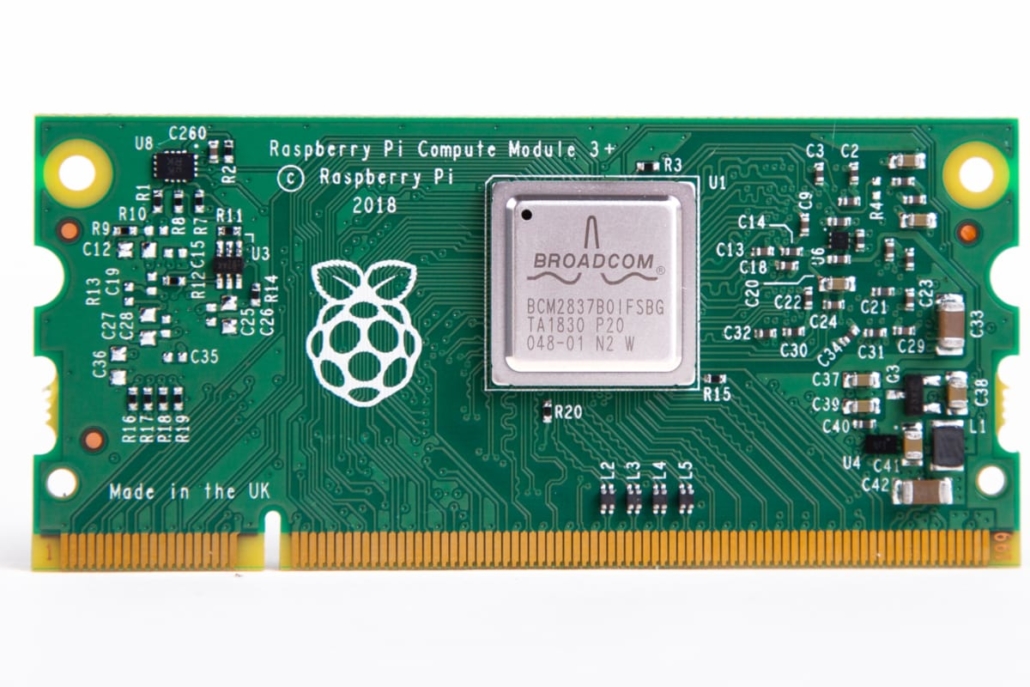
It seems a matter of time before the Raspberry Pi Compute Module 3+ will get its own successor, probably called Compute Module 4, a new milestone of professional embedded IoT module

Possible Raspberry Pi Compute Module 4 specification

  • Broadcom BCM2711, Quad core Cortex-A72 @ 1.5GHz will highly plausible replace previous Broadcom BCM2837B0, Cortex-A53 64-bit SoC @ 1.2GHz,
  • 1GB, 2GB or 4GB LPDDR4-3200 SDRAM will become a standard options, instead of fixed 1GB LPDDR2 SDRAM,
  • Current flash memory (eMMC) options: 8GB / 16GB / 32GB from CM3+ will probably stay the same,
  • H.265 (4kp60 decode), H264 (1080p60 decode, 1080p30 encode) might replace outdated H.264 (1080p30),
  • and OpenGL ES 3.0 graphics will replace 1.1, 2.0 versions,
  • weight and factor will stay the same, to provide a possibility to upgrade current IoT applications of CM3 and CM3+

A Lite 4 version of Compute Module is to be expected too, without eMMC and probably limited SDRAM options.

Rasbperry Pi Compute Module 3+

ModBerry, the first Industrial Raspberry Pi application

With Compute Module 3+ options from Raspberry Pi, TECHBASE upgraded our ModBerry 500/9500 industrial computers. From now on the ModBerry 500/9500 can be supported with extended eMMC, up to 32GB. Higher memory volume brings new features available for ModBerry series.

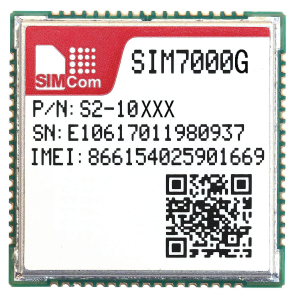
SIMCom SIM7000G

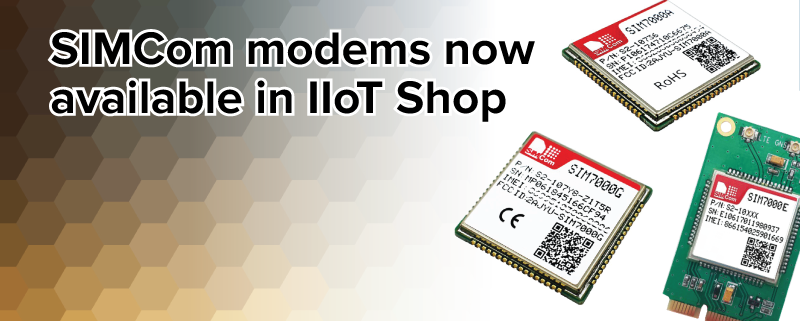
SIMCom NB-IoT modems now available in Industrial IoT Shop

TECHBASE’s Industrial IoT devices, ModBerry & Moduino series supports latest SIMCom global-band SIM7000G eMTC & NB-IoT Module. Now the latest SIM7000G as well as 7000E / 7000A versions of modem are available at IIoT-Shop.

SIMCom SIM7000G

Our ModBerry / Moduino devices equipped with latest SIM7000G modem are perfect for industrial automation solutions, e.g. data logging, metering, telemetrics, remote monitoring, security and data management through all Industrial IoT applications.

Supported bandwidths:

    • Global-Band LTE CAT-M1:  B1/B2/B3/B4/B5/B8/B12/B13/B18/B19/B20/B26/B28/B39;
    • Global-Band LTE CAT NB-IoT1:  B1/B2/B3/B5/B8/B12/B13/B17/B18/B19/B20/B26/B28;
    • GPRS/EDGE 850/900/1800/1900Mhz Control Via AT Commands

Supported data transfer:

    • LTE CAT-M1(eMTC) – Uplink up to 375kbps, Downlink up to 300kbps
    • NB-IoT – Uplink up to 66kbps, Downlink up to 34kbps
    • EDGE Class – Uplink up to 236.8Kbps, Downlink up to 236.8Kbps
    • GPRS – Uplink up to 85.6Kbps, Downlink up to 85.6Kbps

You can browse wireless modem category here: https://iiot-shop.com/product-category/modems/

Industrial Moduino ESP32

(SALE) Special configurations of Moduino ESP32

New preconfigured Moduino ESP32 devices

Hurry up for special offer including various configurations of industrial Moduino ESP32 devices. To access SALE prices of Moduino just register to IIoT-Shop and wait for user verification from our Sales Department.

Moduino is powered by Espressif’s ESP32 module equipped with ultra-low power Dual-Core Tensilica LX6 240 MHz processor with 4MB* pSRAM and 4/8MB SPI flash memory on-board. Integrated Wi-Fi/BLE modem and extra wireline/wireless interfaces make the Moduino micro-computer a versatile addition to Industrial IoT solutions offered by TECHBASE company.

Sleep mode and power saving for Raspberry Pi based ModBerry devices

Sleep functionality for ModBerry/Raspberry Pi devices

TECHBASE company designed new extension module for RaspberryPi-based devices, ModBerry series for better power management in changing conditions of industrial environments. With the use of GPIO the module can manage sleep mode or safe shutdown of device in terms of unexpected drop in the power network.

In last few years developers marketed wide range of ARM-based development boards, lacking in enhanced power management, especially sleep and wake up modes, commonly used in PC-grade computing. These boards are not adjusted for battery power supply, so it’s natural that sleep/wake functions should be implemented. In connection with the development of solutions based on Linux-SBC, key factor is adding sleep modes to any remote installation

With built-in algorithms and the possibility to program on your own, the TECHBASE’s sleep/wake addon module can wake the device using schedule/timer. Another option is wake on external trigger, e.g. change of input, etc. All the options for sleep, shutdown and wake can be configured for various scenarios to ensure constant operation of devices, safety of data and continuity of work in case of power failure in any installation.

The preliminary module for ModBerry devices is available on request and delivery time will be specified by Sales Dept. depending on the size of the project.

Sleep mode with additional power backup

Additional power management option for ModBerry devices is sleep functionality enhanced with SuperCap UPS energy backup device. This solution allows programming scenarios including the execution of chosen actions, in order to save data, send a notification and restart/shutdown the controller after completion.

Advanced power management solution

Most advanced configuration includes use of Moduino ESP32 device for extra logic for wake up / sleep scripts. This addon will allow the RaspberryPi-based ModBerry device to be woken up by Moduino controller via Wi-Fi/GSM/LAN networks.

Moduino-ModBerry symbiosis allows wide range of wake-up/sleep schedule customization, in order to perform best and save energy accordingly to power supply state. Arduino and MicroPython environments provide libraries to control different scenarios of data and power management.

New SuperCap options for Moduino/ModBerry

The SuperCap UPS-SC01 backup power supply is equipped with a highly available backup feature to safely bridge fluctuations, drops or failures accompanying standard 9~30VDC supply voltage and avoid interruption of output voltage in industrial and automation environments. For this purpose SuperCap UPS-SC01 utilizes two supercapacitors (so-called supercaps) as a durable, cycle-resistant and maintenance-free solution for backup energy storage and failure safety.

The UPS-SC01 model is available for purchase at price set to 90€. SuperCap family offers now preliminary and revised models: UPS-SC02 with twice the capacity at 135€ and UPS-SC04 respectively at 180€ with quadrupled capacity of the base device, which can be preordered at our new Industrial IoT Shop, here: https://iiot-shop.com/product/supercap-ups/

New SIM7000G modem for ModBerry / Moduino Industrial IoT devices

TECHBASE’s Industrial IoT devices, ModBerry & Moduino series, now supports latest SIMCom global-band SIM7000G eMTC & NB-IoT Module. New SIM7000G supersedes previous 7000E / 7000A / 7000C versions of modem and provides a universal band set with global coverage, in opposite to Europe, America and China-only solutions.

Our ModBerry / Moduino devices equipped with latest SIM7000G modem are perfect for industrial automation solutions, e.g. data logging, metering, telemetrics, remote monitoring, security and data management through all Industrial IoT applications.

Supported bandwidths:

  • Global-Band LTE CAT-M1:  B1/B2/B3/B4/B5/B8/B12/B13/B18/B19/B20/B26/B28/B39;
  • Global-Band LTE CAT NB-IoT1:  B1/B2/B3/B5/B8/B12/B13/B17/B18/B19/B20/B26/B28;
  • GPRS/EDGE 850/900/1800/1900Mhz Control Via AT Commands

Supported data transfer:

  • LTE CAT-M1(eMTC) – Uplink up to 375kbps, Downlink up to 300kbps
  • NB-IoT – Uplink up to 66kbps, Downlink up to 34kbps
  • EDGE Class – Uplink up to 236.8Kbps, Downlink up to 236.8Kbps
  • GPRS – Uplink up to 85.6Kbps, Downlink up to 85.6Kbps

Our ModBerry / Moduino devices with global-band SIM7000G are available for testing and developing purposes, due to pending certifications of this module. For more information please contact our sales managers via live chat or contact forms.


SuperCap UPS – Backup power supply for Raspberry Pi / ESP32 IIoT devices

The new SuperCap UPS-SC01 backup power supply is equipped with a highly available backup feature to safely bridge fluctuations, drops or failures accompanying standard 9~30VDC supply voltage and avoid interruption of output voltage in industrial and automation environments. For this purpose SuperCap UPS-SC01 utilizes two supercapacitors (so-called supercaps) as a durable, cycle-resistant and maintenance-free solution for backup energy storage and failure safety.

As an addition to Industrial IoT family of TECHBASE’s products, such as ModBerry (Raspberry Pi Compute Module 3 powered) industrial gateways and Moduino (ESP32 powered) end-point devices, the SuperCap UPS-SC01 serves well as an additional, highly efficient and fanless power source to allow continuous operation of connected devices in difficult conditions, such as extended industrial temperature range. Perfect solution for a multi-range applications, especially for embedded IIoT / Industry 4.0 systems, where stability and high availability is most important.

Read more

ModBerry M500 upgrades to Raspberry Pi 3 B+

The latest version of Raspberry Pi development board, Raspberry Pi Model 3 B+, is now available as a platform for ModBerry M500 industrial computer series. Raspberry Pi 3 Model B+ (Plus) offers has more computing power and much greater possibilities in the field of wired and wireless communication.

The biggest new feature introduced in 2016 is the Raspberry Pi 3 wireless support. Now the creators took a step forward and refined the solution. The new Raspberry Pi 3 Model B+ – supports two-band Wi-Fi (2.4 GHz and new 5 GHz), Bluetooth version 4.2  and Ethernet over USB 2.0 (up to 300 Mb / s). Upgraded ModBerry M500 series is powered by s more powerful heart, in the form of a Broadcom BCM2837B0 quad-core processor clocked at 1.4 GHz. Power-over-Ethernet support has also appeared, and heat dissipation has been improved.

ModBerry M500 on Raspberry Pi 3 Model B+

ModBerry M500 vs ModBerry 500(CM3)

Standard ModBerry 500 series is based on Raspberry Pi Compute Module 3, an industrial version of commercial Raspberry Pi branch, with flagship Raspberry Pi 3 Model B+. Used Compute Module is more suitable for custom products, such as our ModBerry 500 industrial computer, which can be adapted to customer’s need with wide range of extension modules from TECHBASE. ModBerry equipped with CM3 can be configured to support chosen number of RS-232/485 serial ports, Digital and Analog I/Os, various setup of Ethernet/USB ports, CAN interface, 1-Wire and wireless modems: 3G/LTE, GPRS/EDGE, GPS, LoRa, ZigBee, Wireless M-Bus, NarrowBand-IoT and many more.

The updated M500 availability

Currently the updated M500 samples, are available on demand. Please contact TECHBASE’s sales department via https://modberry.techbase.eu/ contact form with specific requirements to receive an offer that will suit the project’s needs. Since the M300 update is still under the development, the development, specific datasheets will be available in mid-June. The pricing of each unit may vary on the basis of configuration and order quota.